

I've Never Seen This in Scripture Before
An obscure story of spiritual and psychological assault from 2 Kings.

There’s a true joy that comes from reading a Scripture you’ve probably glazed over a few times and suddenly seeing something you swear wasn’t there before.
The Bible hasn’t changed, of course. But you probably have. Something in you has been opened up to receive the text in a particular way in a particular moment, and now the light falls on it differently.
That happened to me last night when I was reading 2 Kings 18 and 19.
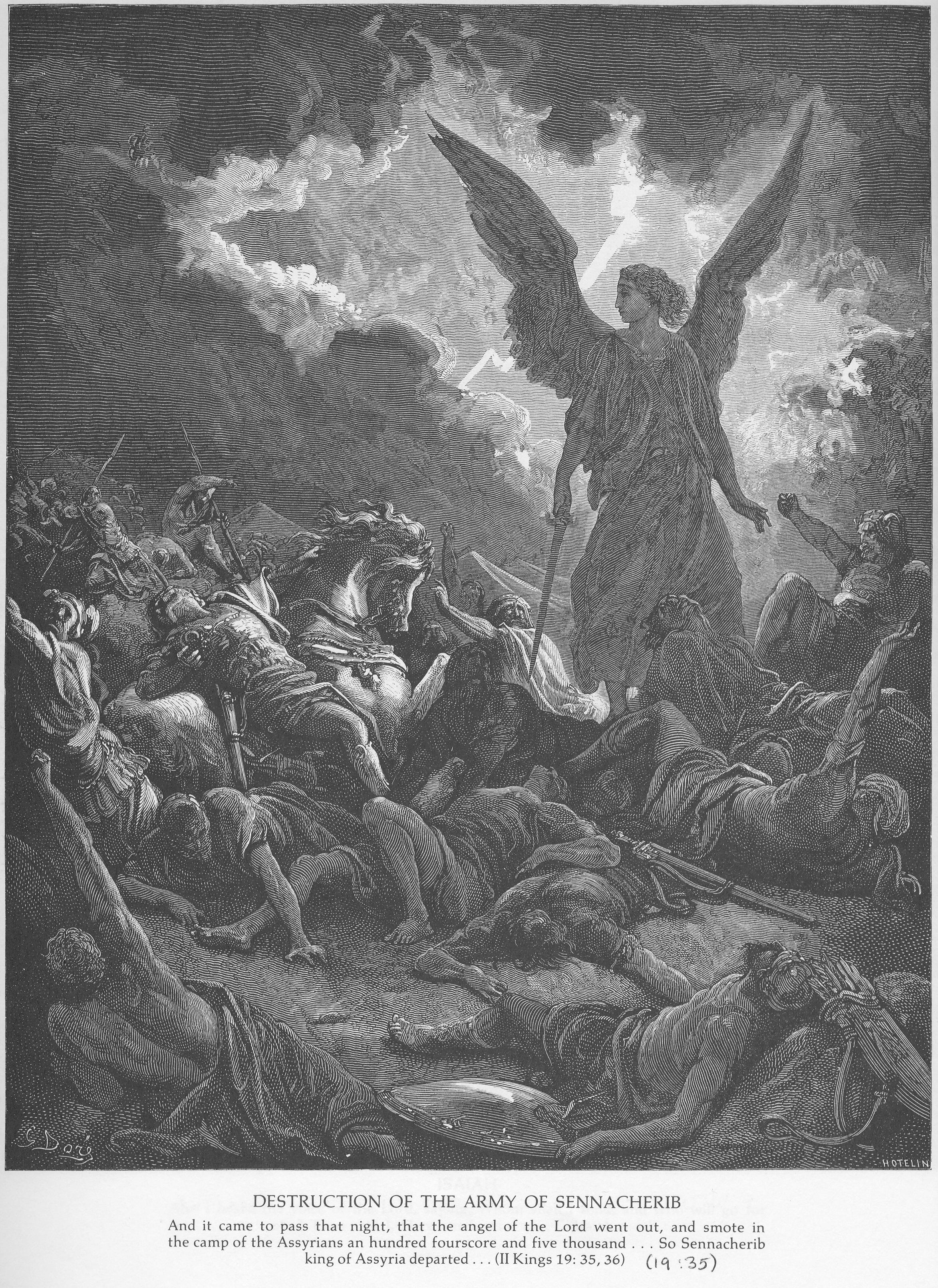
If you're not familiar with the passage, don’t fret. I don’t remember ever reading it before.
Let me set the scene. Hezekiah was king of Judah, one of the best since David: A man who tore down the idols, trusted God, and refused to bow to the Assyrian empire even when every practical reason screamed that he should.
During Hezekiah’s thrashing of demon worship, the King of Assyria (the most powerful dude on earth), sent his right-hand man to the gates of Jerusalem. And what happens is one of the craziest spiritual and psychological assaults in all of Scripture.
Rather than coming in an all-out attack or giving a (probably) normative declaration of war, this guy stood at the aqueduct of an upper pool and gave a speech straight from what seems like Satan himself.
It’s pretty clear he was sent to unravel the faith of the entire city.
He mocks their alliance with Egypt. He twists Hezekiah's spiritual reforms. He claims that God himself sent Assyria to destroy Judah (which was ultimately true, although a twisting of truth). And then, quite insidiously, he offers the people peace and prosperity: every man under his own vine and fig tree if they only will abandon their king and their God and surrender.
The whole thing is manipulative. But also theologically sophisticated and deeply personal. The guy speaks in Hebrew instead of Aramaic, so the soldiers on the wall could hear every word. He wants the doubt to spread like cancer in the body.
Now flip forward about seven hundred years.
Jesus had just been baptized. The Spirit descended like a dove, the Father spoke, and the Son was given the nod of approval. Then (apparently) immediately, as if on cue, Christ is driven into the wilderness for forty days of fasting. Then, of course, the devil shows up.
Not only is the scene oddly similar, but the conversation is eerily familiar. The whole encounter is a masterclass in spiritual manipulation and assault.
Here's what I think we can notice: In both cases, God's anointed king is under spiritual siege. In both cases, the enemy's goal isn't sheer force but to entice through manipulated promises and the distortion of truth or Scripture.
John Bunyan surely picked up on this tactic of the enemy. In Pilgrim’s Progress, Christian passes through the Valley of the Shadow of Death and hears these blasphemous whispers that he begins to mistake for his own thoughts. It’s as if the darkness itself had learned to speak in his voice. The enemy’s oldest trick is making his thoughts sound like yours.
It’s good to look for typological mirrors in Scripture: Typically, how someone foreshadows Christ in some particular way. But I think the case can be made that this dude (Rabshakeh) embodies or foreshadows Satan.
The name Rabshakeh is worth pausing on. That’s an Assyrian title that roughly means chief cupbearer. Back then, cupbearers were the guys who guarded what the king drank, and by extension, were some of the most trusted men in any given empire.
So here he stands, this great giver of drinks, ironically or not, at the aqueduct of the upper pool, offering Jerusalem a cup of despair dressed up like mercy. The author of 2 Kings seems to be winking at us. Maybe Luke decided to as well.
Because the devil in the wilderness was running the same playbook on Jesus. The “cups” he offers are sovereignty over the kingdom, angelic protection, a shortcut to glory, and (of course) every one of these is laced. The chief cupbearer of Assyria and the prince of darkness turn out to be colleagues.
The long and the short of it is that Rabshakeh left Jerusalem empty-handed. God was faithful to Hezekiah, and 185 thousand Assyrians got straight up slaughtered in the night by the angel of the Lord. In Luke 4, Satan also leaves empty-handed—his destruction will come later.
The parallels are wild, but this is the beauty of biblical typology. The way the Old Testament builds toward Christ isn’t just through prophecy but through patterns. Hezekiah was a genuine type of Jesus: a righteous king in Jerusalem who trusted in God, yet under attack by pure evil,
But it’s important to get that he’s a type, not Jesus himself. He points forward.
Our king would end up drinking the cup of poison. Not in the wilderness in temptation to Satan, but at the cross in obedience to the Father. Satan meant it for evil, but God meant it for good.
The whole world was under spiritual and psychological attack. But unlike Hezekiah, Christ walked out of the city, drank in death, paid by his precious blood, and in doing so, tore down Satan’s “arguments and every lofty opinion raised against the knowledge of God.” (2 Cor. 10:5).
We can only imagine the slaughter in Satan's camp when Christ gave his life at the Cross. And how many more when he rolled the stone away three days later!
But we don’t have to imagine what it means for us.
As George Herbert wrote in 1633,
“Love is that liquor sweet and most divine, Which my God feels as blood, but I as wine.”
Dope connection! Thank you for sharing. 🙏🏽
Wow this is pretty incredible. Never saw that connection!