

Echoes of Eden
We've left the garden, but can't get away from it.

As I mentioned last time, there are countless parallels throughout Scripture. One of the chief parallels (if we can even call it that) is Eden.
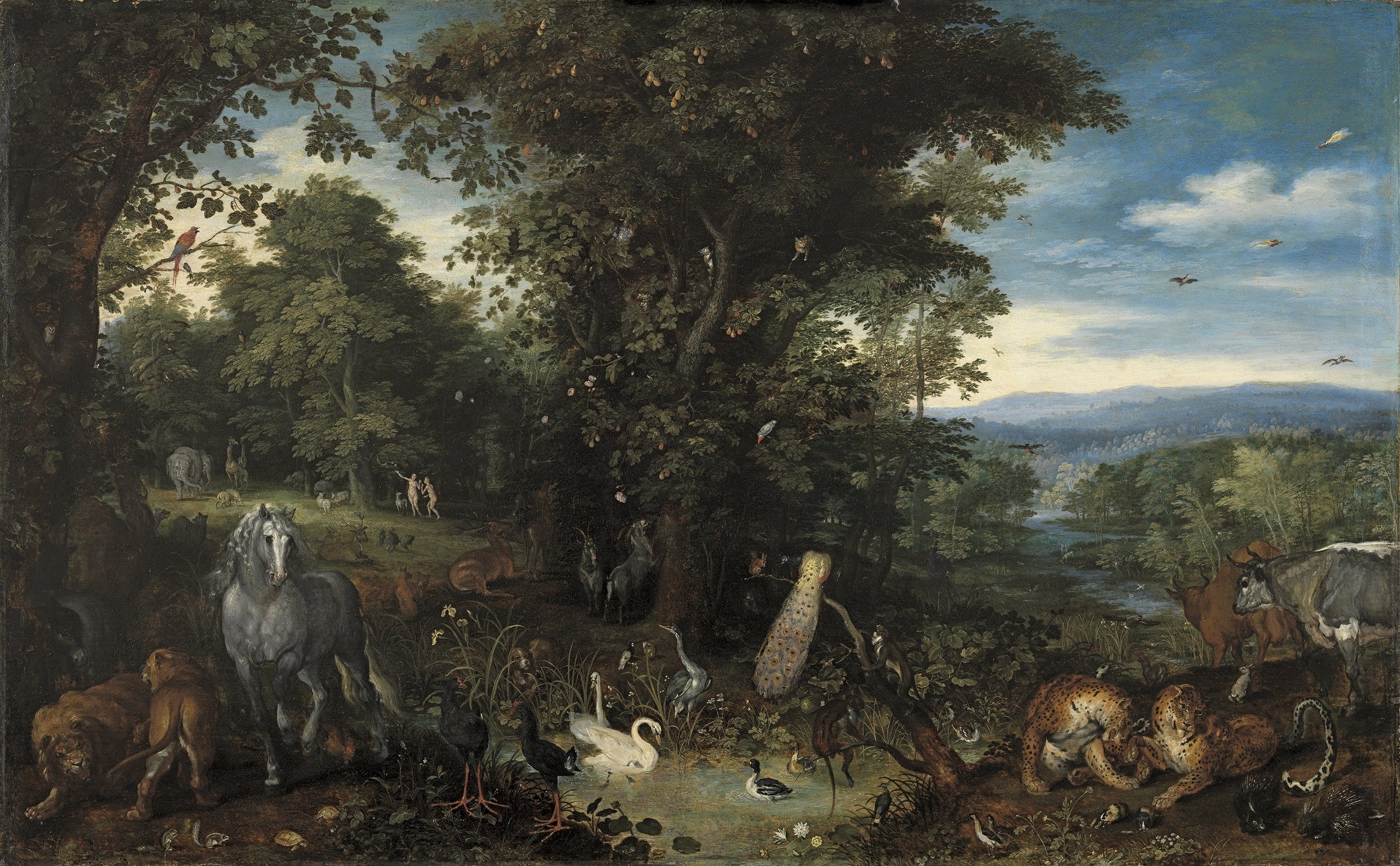
Eden opens at the mouth of Scripture like a spring at the headwaters of a river.
Many later streams of Scripture carry its memory. Read the text from a further mile marker, and the waters still remember their source. Some carry only a trickle of this fountainhead, some merely pull from underneath the subterranean stream, but some bring the whole deluge out in plain sight.
“See, I am doing a new thing; now it springs up, do you not perceive it? I am making a way in the wilderness and streams in the wasteland.” -Isaiah 43:19 NIV
Think about the tabernacle, and later, the temple. They deliberately and directly echo Eden’s design. The lampstands blossom like trees. The Cherubim guard the sacred place, resembling the watchers set at Eden’s gate. The priests serve as new Adamic priests, tending the holy ground through obedience and offering.
I think the case can be made that much of the Bible is written with Eden as its lens. The authors weren’t pulling from thin air. As God divinely inspired their words, Eden was their myopia, their remembered mythos.1 The garden in Genesis is much more than a beginning. It gives us a helpful and beautiful way of seeing and understanding Scripture’s entire story.
There’s another major example of Eden that appears at the far end of Scripture. Revelation closes with a garden-city. One that echoes the creation story of paradise. A river flows through the heart of the city. The tree of life stands in the center, and its fruit is offered freely to all who dwell there. Its leaves blossom with healing for the nations. And God dwells with humanity again; His presence restored to us fully and finally.
The prophetic picture shows us our “home”, yet the home feels different than the first, somehow made stronger by suffering and filled in with new hues of color by redemption. Almost as if Romans 8:28 doesn’t just apply to the millennial sorrows of practical day-to-day life, but to the entire narrative of God’s redemptive history.2
But Eden isn’t just the backdrop for a biblical worldview or interpretive framework; it’s also the cultural lens in which many people see life—whether they know it or not.
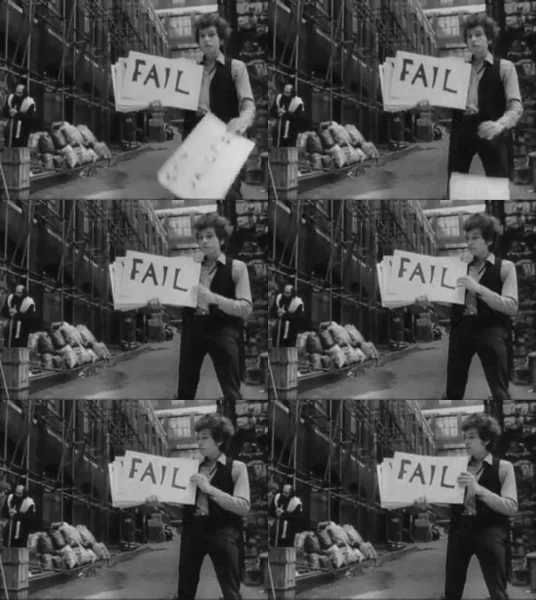
Bob Dylan once wrote: “Oh, where have you been, my blue-eyed son? And where have you been, my darling young one? I’ve stumbled on the side of twelve misty mountains. I’ve walked and I crawled on six crooked highways. I’ve stepped in the middle of seven sad forests. I’ve been out in front of a dozen dead oceans.”
No doubt, Dylan knows how our story began… It seems he’s probably referencing the 12 tribes and apostles, the brokenness of life (the six crooked highways), the whole world caught up in post-Edenic disaster (the seven sad forests), but he doesn’t (or didn’t) have any hope that it could be saved and restored: “And it’s a hard, it’s a hard, it’s a hard, it’s a hard, it’s a hard rain’s a-gonna fall.”
For Bobby (at least back in ‘63), the bombs are gonna keep on dropping. The Fall was simply the first in a series of falls.
Literature across centuries is littered with the same dismal theme. Dante climbs toward a garden at the summit of his purgatorial mountain. Milton understood life through “Paradise Lost”. Humanity, somewhere deep in its bones (perhaps, its soul) remembers a harmony that was once native to us.3
C.S. Lewis captured this idea indelibly in Perelandra—the second book of his Space Trilogy. He does so by retelling Eden through another world. This unfallen planet is alive with obedience, where creatures live with a joyful limitlessness. The whole story’s drama is whether this Eve will make the same mistake. Lewis wrote with a sense that Eden is still present, pressing upon every moral, aesthetic, and spiritual choice we make. Perhaps each decision carries the continued weight of that first garden.
Eden gives us the language for longing and loss, obedience and hope, beauty and brokenness. It explains why the world is and also feels fractured, and why we still expect it to make sense. It tells us why beauty still captures us dead in our tracks, why disobedience never truly satisfies, and why restoration is an undergirding hope in all people—even if it is a hope deferred or a hope rejected.
Maybe Bob Dylan thought there was nothing to be done, but the fact that he understood life to be “wrong” in some sense shows that Eden is in the soil of the soul, whether we like it, know it, or not.
Not saying it’s a myth in the sense of non-literal, by the way, but rather the story in which framed their thinking.
Romans 8:28 says, “And we know that for those who love God all things work together for good, for those who are called according to his purpose. ”
“He has made everything beautiful in its time. Also, he has put eternity into man’s heart, yet so that he cannot find out what God has done from the beginning to the end.” -Ecclesiastes 3:11
BEAUTIFUL